.png)

How changing trade patterns, regional partnerships, and digital innovation are reshaping marine logistics across the United States
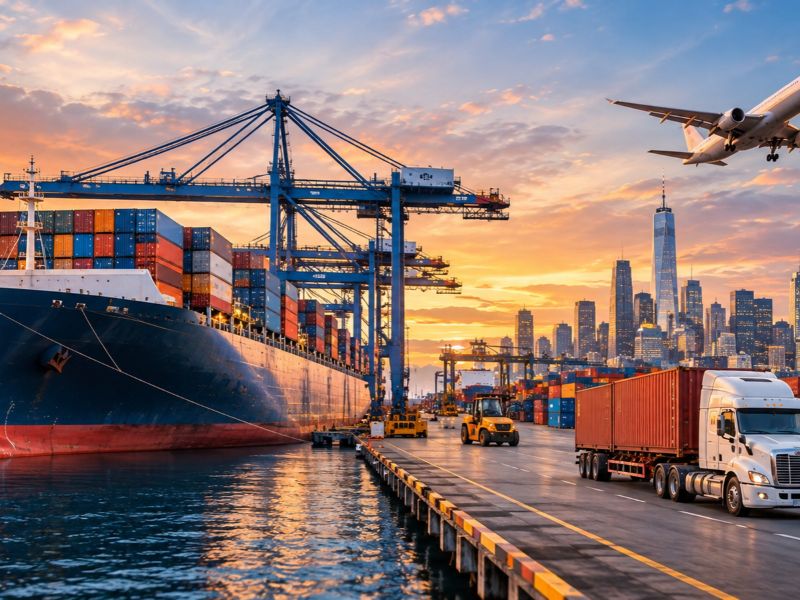
Every product that reaches a store, factory, or distribution center has a supply chain behind it. For many of these products, that journey begins or ends at a port. Ships bring in raw materials, carry manufactured goods to international markets, and transport essential commodities that support businesses across the United States. While the movement of cargo may appear straightforward, getting goods from one destination to another involves shipping companies, port operators, freight forwarders, warehouses, railroads, and trucking providers working together. When one part of this network faces a delay, the effects can reach businesses hundreds or even thousands of miles away. This is why maritime supply chain management has become more than a transportation concern. It is now an important part of how businesses manage costs, maintain customer relationships, and plan for the future.
The scale of America's dependence on maritime transportation is considerable. According to the U.S. Bureau of Transportation Statistics, waterborne transportation handled approximately $2.2 trillion in international freight to and from the United States in 2024, representing 42.4 percent of total trade value. By weight, ships accounted for 79.2 percent of international freight. These figures help explain why port operations and shipping services have such a direct influence on the wider economy. A delayed vessel can affect warehouse schedules, manufacturing operations, retail inventories, and delivery commitments. For companies involved in marine logistics, the challenge is to keep these connections working even when trade volumes change, transportation costs rise, or unexpected disruptions occur. Businesses can no longer look at shipping, storage, and inland transportation as completely separate activities. Each one affects the performance of the others.
The West Coast is an important part of this network, particularly because of its strong trade connections with Asia. Ports such as Los Angeles, Long Beach, Oakland, Seattle, and Tacoma handle a wide range of imported goods, including electronics, machinery, clothing, and consumer products. However, the work does not stop once a ship reaches the terminal. Containers must be unloaded, processed, transferred to trucks or trains, and delivered to warehouses and distribution centers across the country. A delay at the port can quickly create pressure on the rest of the supply chain. The East Coast has a different but equally important role. Ports such as New York and New Jersey, Savannah, Charleston, and Virginia support container shipping, automobile imports, agricultural exports, and industrial trade. For businesses operating in these regions, choosing the right shipping route involves more than comparing freight rates. Port capacity, inland transportation connections, cargo handling facilities, and delivery schedules all influence the final decision. The growth of alternative trade routes has also made regional port planning an important consideration for shipping companies and cargo owners.
Along the Gulf Coast, maritime logistics is closely connected to the energy, petrochemical, agricultural, and manufacturing industries. Ports in Houston, New Orleans, Mobile, and other regional centers handle petroleum products, chemicals, grain, steel, and industrial materials. Their operations depend on a combination of vessels, storage facilities, pipelines, railroads, and inland waterways. However, the region is also exposed to severe weather, particularly hurricanes, which can interrupt port activity and delay shipments. Businesses must consider these risks when planning transportation schedules and managing inventory. The Great Lakes region presents a different set of challenges. Ports across Michigan, Ohio, Wisconsin, Illinois, and Minnesota support the movement of iron ore, steel, grain, limestone, and other bulk commodities. Since navigation conditions can change with the seasons, companies operating in this market need to plan carefully around vessel availability, cargo schedules, water levels, and maintenance requirements. These regional differences make it difficult to apply the same logistics strategy everywhere. Understanding local conditions is essential to keeping transportation reliable and commercially viable.
For many maritime businesses, managing costs has become just as important as securing new customers. Freight rates can change with fuel prices, cargo demand, vessel availability, and international trade conditions. Additional expenses can arise from port congestion, container shortages, equipment failures, and unexpected waiting times. Smaller logistics providers may find these pressures particularly difficult because they have fewer resources to absorb sudden increases in operating costs. One way to address this is to look more closely at how resources are being used. Better vessel scheduling, efficient cargo handling, accurate delivery planning, and coordination with inland transportation providers can help reduce unnecessary expenses. Businesses can also benefit from maintaining relationships with multiple suppliers and transportation partners. Having alternative arrangements does not eliminate disruptions, but it gives companies more flexibility when their usual routes or service providers are unavailable. In a competitive market, dependable service and cost management often matter as much as the freight price itself.
Technology is gradually changing how companies manage these operations. Cargo tracking platforms, electronic documentation, automated terminal systems, and predictive maintenance tools are giving logistics teams better visibility into daily activities. A company that can track a shipment in real time has a better chance of identifying delays and updating delivery schedules before customers are affected. Predictive maintenance can also help vessel operators identify equipment problems before they lead to expensive breakdowns. The U.S. Department of Transportation's Freight Logistics Optimization Works (FLOW) initiative reflects this growing focus on information sharing between ports, ocean carriers, and cargo owners. However, digital transformation is not as simple as introducing new software. Shipping companies, terminal operators, and freight forwarders often use different systems, making it difficult to share information smoothly. Smaller businesses may also struggle with technology costs, cybersecurity, and employee training. The practical approach is to invest in tools that solve real operational problems, whether that means improving cargo visibility, managing fuel consumption, or reducing paperwork.
Strong relationships across the supply chain are equally important. A shipping company cannot guarantee timely delivery without dependable port services, just as a manufacturer cannot maintain production without reliable transportation partners. The same applies to businesses handling specialized cargo. Pharmaceutical products, food, and other temperature-sensitive goods require careful storage, monitoring, and transportation throughout their journey. A delay or equipment failure can affect product quality and create significant financial losses. These requirements make communication between cargo owners, shipping companies, warehouse operators, and logistics providers particularly important. Regular coordination helps businesses understand changing requirements, prepare for possible delays, and avoid last-minute complications. For marine logistics companies, building these relationships takes time, but dependable partnerships can make everyday operations much easier to manage.
Infrastructure and workforce development will also influence how well the American maritime supply chain performs in the coming years. Ports need reliable terminals, well-maintained navigation channels, modern cargo-handling equipment, storage facilities, and efficient rail and road connections. At the same time, the industry depends on skilled seafarers, marine engineers, port workers, truck drivers, warehouse employees, and logistics professionals. As more operations become technology-driven, employees need to understand digital systems, automated equipment, safety procedures, and modern cargo management practices. Companies can address these requirements through practical training and partnerships with maritime academies, technical colleges, and workforce development institutions. Investments in infrastructure and employee development may not produce immediate financial returns, but they help build a more reliable transportation network. They also prepare businesses to manage future increases in cargo demand and changes in operating requirements.
The future of marine logistics in the United States will depend on how well businesses respond to these everyday challenges. The West Coast's international trade connections, the East Coast's expanding distribution networks, the Gulf Coast's energy-related transportation, and the Great Lakes' industrial cargo movement all require different approaches. Yet, the underlying priorities remain similar: controlling costs, improving coordination, maintaining reliable infrastructure, and responding quickly when something goes wrong. Building a stronger maritime supply chain does not necessarily mean operating more vessels or expanding into every available market. It starts with understanding where delays occur, making better use of available resources, and working closely with the businesses that keep goods moving. As trade and transportation continue to evolve, companies that treat maritime logistics as a shared responsibility across the supply chain will be better equipped to serve customers and remain competitive.